Disclaimer:The trades discussed in this blog reflect the author's personal strategies and decisions. These are not financial advice and should not be considered recommendations to buy, sell, or hold any financial instruments. The author is not a licensed financial advisor. Options trading carries significant risk, and readers should perform their own research or consult a qualified financial advisor before making any investment decisions. Past performance does not guarantee future results.
Eli Lilly (LLY) has pulled back hard from its highs and is now sitting right on the 200-day moving average, with an IV rank above 85%. That combination was enough for me to sell a put on it.
The Trade
Here's the trade:
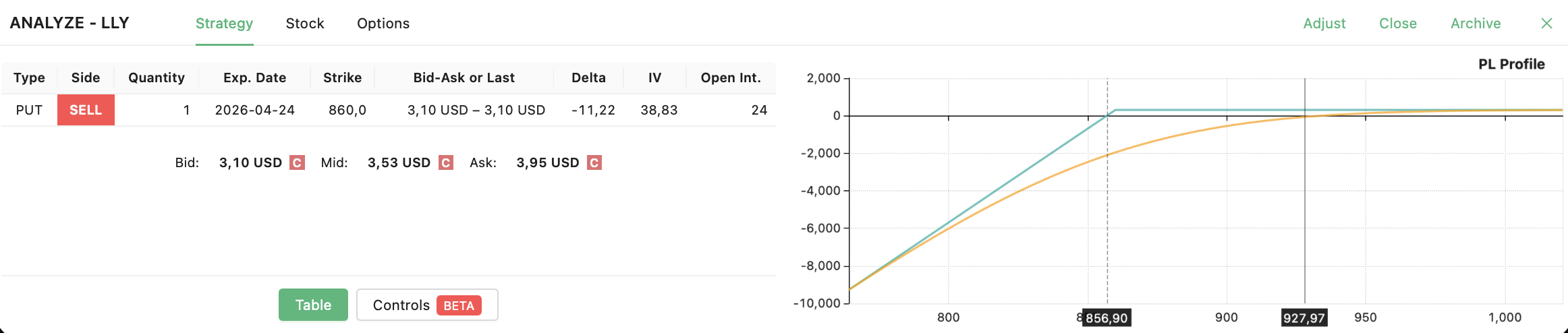
Sell 1x LLY 24 Apr 2026 $860 Put @ $3.10
Breakeven: $856.90
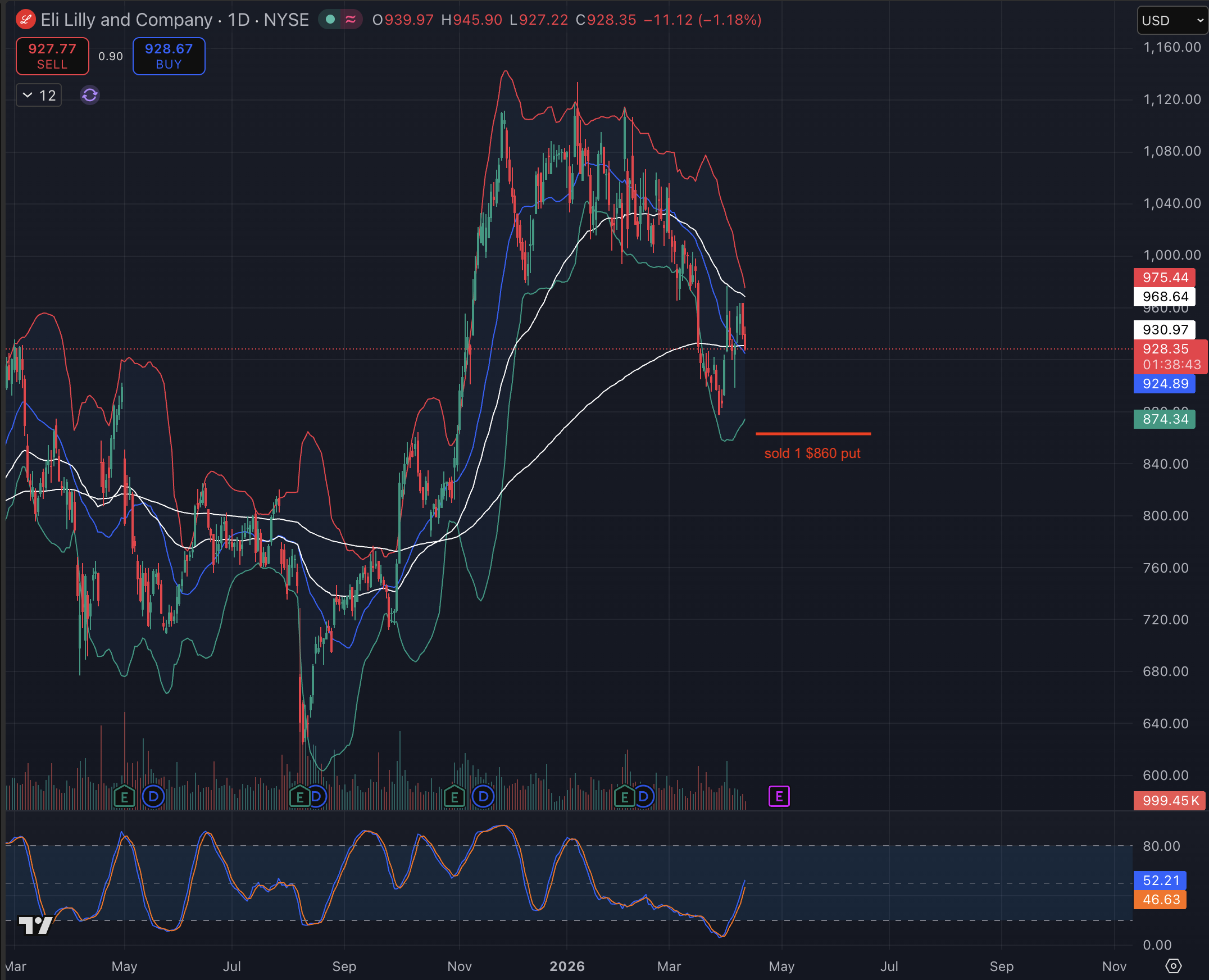
For reference, here is the current price chart of LLY:
The stock is down roughly 15% from the November highs and the lower Bollinger band has been tagged, so the setup looks stretched to the downside. My short strike at $860 sits comfortably below current price (~$928) and below the recent swing low area.
One important caveat: LLY reports earnings on April 30, which is why I am not comfortable selling an option for a later expiration. I know IV may not decline much ahead of earnings (and part of the edge from a high IV rank entry comes from vol compression that won't necessarily materialize here) but I think the odds still look good. The cycle picture is constructive, and the probability that price crashes through my strike before earnings is low given how far out of the money I am and how short the holding period is. Worst case, I give back some of the premium to theta working against vega; best case, I collect most of it on the way down.
For the record, I'm OK with either rolling this or doing the wheel strategy if things go south, but the plan is to be flat some time around next week.
As always, I have logged the trade in my trade log.
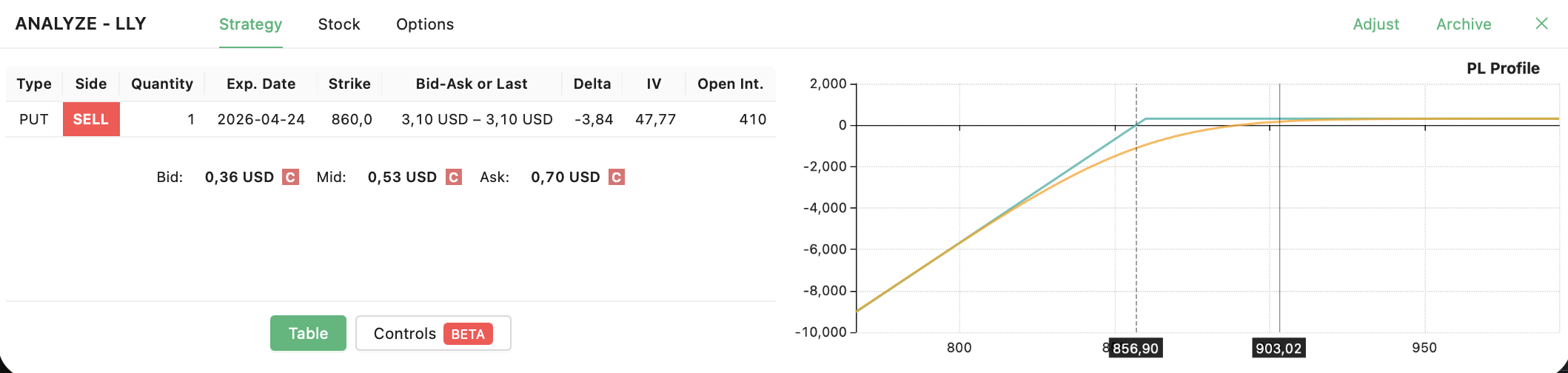
Update: Trade Closed
It was a bit more volatile than I anticipated, but I closed the trade above 80% of profit:
Gianluca Longinotti is an experienced trader, advisor, and financial analyst with over a decade of professional experience in the banking sector, trading, and investment services.

 Gianluca LonginottiFinance Writer - Traders Education