Many traders start with single leg options because they’re simple to understand and easy to manage. But what makes them so effective, and when should you use them? In this article, we’ll explain single leg options trading, how to trade single leg option strategies, and why one leg options still matter today.
KEY TAKEAWAYS
Single leg options are four popular trading setups: long call, long put, short call, short put.
These trades are simple, flexible, and easy to manage compared to multi leg spreads
Traders can use them to speculate on direction or generate income depending on market outlook
What is a single leg option?
Single leg options include four basic setups that every trader should know: long call, long put, short call, and short put. Each trade involves buying or selling a single option contract without combining it with another position. This makes them simple to understand and easier to execute than complex multi leg spreads.
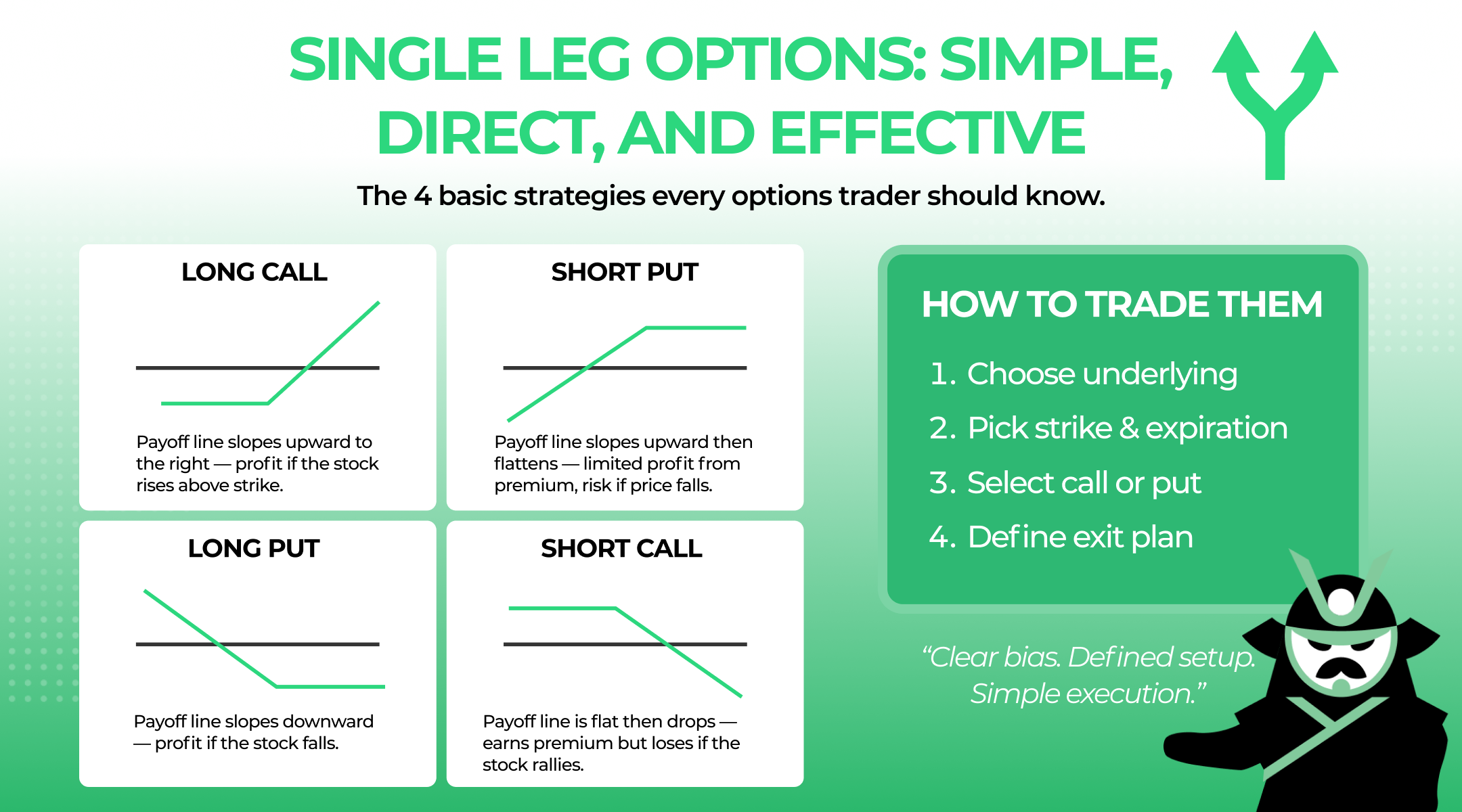
Here is a simple infographic that sums up the 4 type of single leg options trades:
A single leg option trade means you have a clear expectation in your mind:
A long call profits if the stock rises above the strike price.
A long put profits if the stock falls below the strike price.
A short call collects premium but risks losses if the stock rallies.
A short put earns income but carries the obligation to buy the stock if it drops.
In short, single leg options trading focuses on one position at a time. While multi leg strategies may be subtle, one leg options keep things direct, letting traders act fast on simple directional views. And by the way, you can build any scan you want on our screener for options trades based on the strategies above (or try out more complex ones).
When to trade single leg options
Single leg options work best when you have a clear view on where the stock is heading or want to manage risk in a simple way. Traders often use them for:
Directional bets when expecting a strong move up or down
Hedging to protect existing stock positions
Income generation through covered calls or cash secured puts
Because execution is straightforward, single leg options trading suits beginners and anyone who values clarity. The risks are also clear: the premium paid for buyers or the obligation taken if assigned. Timing and volatility expectations often decide when to trade one leg options effectively.
How to trade single leg option strategies
Trading single leg options is simple once you know the steps. Start by picking the underlying stock or ETF, then choose a strike price and expiration that fit your market view. Decide whether to buy or sell a call or put, depending on your bias. Traders who later want to reduce cost or shape risk more precisely often transition from single leg setups to multi-leg-options, where multiple contracts are combined into one structured position.
Step
Action on simple leg options
Purpose
1
Choose underlying
Select a stock or ETF you understand
2
Pick strike & expiry
Match risk/reward to your outlook
3
Choose call or put
Buy calls for bullish, puts for bearish trades. The logic is flipped for selling options.
4
Check margin or cash needs
Remember: selling options requires capital (you may get assigned shares)
5
Plan exit
Know max gain/loss before entering
Knowing how to trade single leg option strategies means managing risk and staying disciplined, especially when volatility changes. One leg options reward clarity over complexity.
Gianluca Longinotti is an experienced trader, advisor, and financial analyst with over a decade of professional experience in the banking sector, trading, and investment services.
Leav Graves is the founder and CEO of Option Samurai and a licensed investment professional with over 19 years of trading experience, including working professionally through the 2008 financial crisis.

 Gianluca LonginottiFinance Writer - Traders Education
 Leav GravesCEO